
Let’s safeguard one of Danish business’s greatest strengths
This year marks the 150th anniversary of the founding of the Carlsberg Foundation. It is an important part of Carlsberg’s history - but also an opportunity to focus on something bigger: the Danish foundation ownership model as a distinct Danish strength.
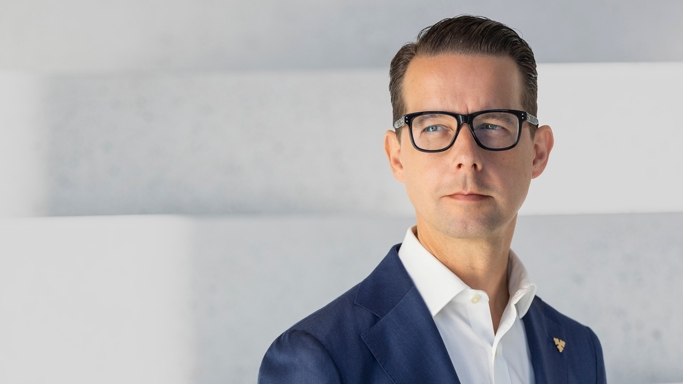
Opinion: Jacob Aarup-Andersen, CEO of Carlsberg Group
Geopolitical turmoil has put many companies on high alert. Understandably so. But as we work to manage short-term challenges, we must not lose sight of the long term. This is precisely where the Danish foundation ownership model shows its strength. Stable ownership enables companies to balance short-term performance with long-term relevance.
The foundation ownership model is a distinctive form of Danish capitalism. It is one reason why a small country like Denmark has been able to build companies that compete on the global stage. It combines commercial agility with long-term responsibility.
Carlsberg is a concrete example. Like other listed companies, Carlsberg moves quickly, competes intensely and pursues opportunities quarter by quarter. At the same time, through the Carlsberg Foundation, we have a forward-looking and strong principal shareholder that supports our ability to invest in innovation, long-term strategies and initiatives that maximise our impact on society and our business over time.
We see this at the Carlsberg Research Laboratory, where science and innovation have gone hand in hand for more than 150 years. And we see it in major strategic decisions such as the acquisition of Scottish & Newcastle in 2008 and Britvic in 2025 - decisions that require both commercial discipline and a long-term perspective.
The foundation ownership model is also about Danish ownership. Over recent decades, many global industries have consolidated significantly - including the beer industry. Without foundation ownership, Carlsberg and other foundation-owned Danish companies would likely have become acquisition targets for foreign capital interests long ago.
This is not about closing Denmark off from the world. Danish companies must remain international and outward-looking. But it matters where ownership resides, and where long-term decisions are made. It matters for jobs, investment, the tax base, the green transition and Danish standards.
That is why it is paradoxical when questions are raised from time to time about whether we should weaken the role of foundations or tax their grants more heavily. It is legitimate to discuss the framework conditions. But the debate should start with the total value the model creates.
The contribution of foundations does not stop at ownership. Danish enterprise foundations contribute around DKK 20 billion each year to philanthropic purposes. For Carlsberg, this means that up to one third of the dividends, through the Carlsberg Foundations, is returned to society through grants for basic research, culture, young people and broader societal purposes - funding that strengthens Denmark as a whole.
This was also the founding idea of brewer J.C. Jacobsen and his son Carl Jacobsen: that the brewery should serve a purpose beyond itself.
Today, some political voices are calling for foundations’ grants for philanthropic purposes to be taxed. If public benefit is politicised in this way, or if greater uncertainty is created around the taxation of foundation grants, we risk reducing the funds available for precisely the purposes that benefit society. At the same time, we risk making a well-functioning ownership model less attractive for the companies that benefit from stable owners capable of supporting long-term investment.
When I meet business leaders from other countries, I often encounter genuine interest in the Danish foundation ownership model. Many admire an ownership form that has enabled companies such as Carlsberg, Novo Nordisk and Mærsk to grow globally while remaining firmly rooted in Denmark.
Some may associate foundation ownership with something old-fashioned. My experience is the opposite. Many of Denmark’s most forward-looking, resilient and innovative companies are precisely those characterised by stable foundation ownership.
In a turbulent world, Denmark will need more of exactly this combination. We will need companies that can invest in innovation, the green transition, new markets and the jobs of the future. That requires capital, agility and owners who can both set high expectations and stay the course.
That is why we should strengthen the Danish foundation ownership model - not undermine it. It is one of the reasons Denmark has been able to build companies with global reach, Danish roots and a meaningful contribution to society.

Central & Eastern Europe and India
-
Azerbaijan
-
Belarus
-
Bulgaria
-
Canada
-
Croatia
-
Estonia
-
Greece
-
Hungary
-
India
-
Italy
-
Kazakhstan
-
Latvia
-
Lithuania
-
Nepal
-
Serbia
-
Ukraine